Skip to content

Tours in Libya

Libya tourist attractions, from Roman theatres to Saharan lakes

Libya tourist attractions include five UNESCO World Heritage Sites: Leptis Magna, Sabratha, Cyrene, Ghadames and the Tadrart Acacus. Add Tripoli’s walled medina, the Ubari Lakes and the Waw an Namus crater. The coastal sites are reached by road from Tripoli or Benghazi; the Sahara sites need a 4×4 expedition with permits.

The West

طرابلس

Tripolitania: Roman cities on the coast, Tripoli’s medina and the oasis of Ghadames. Reached by road from Tripoli.

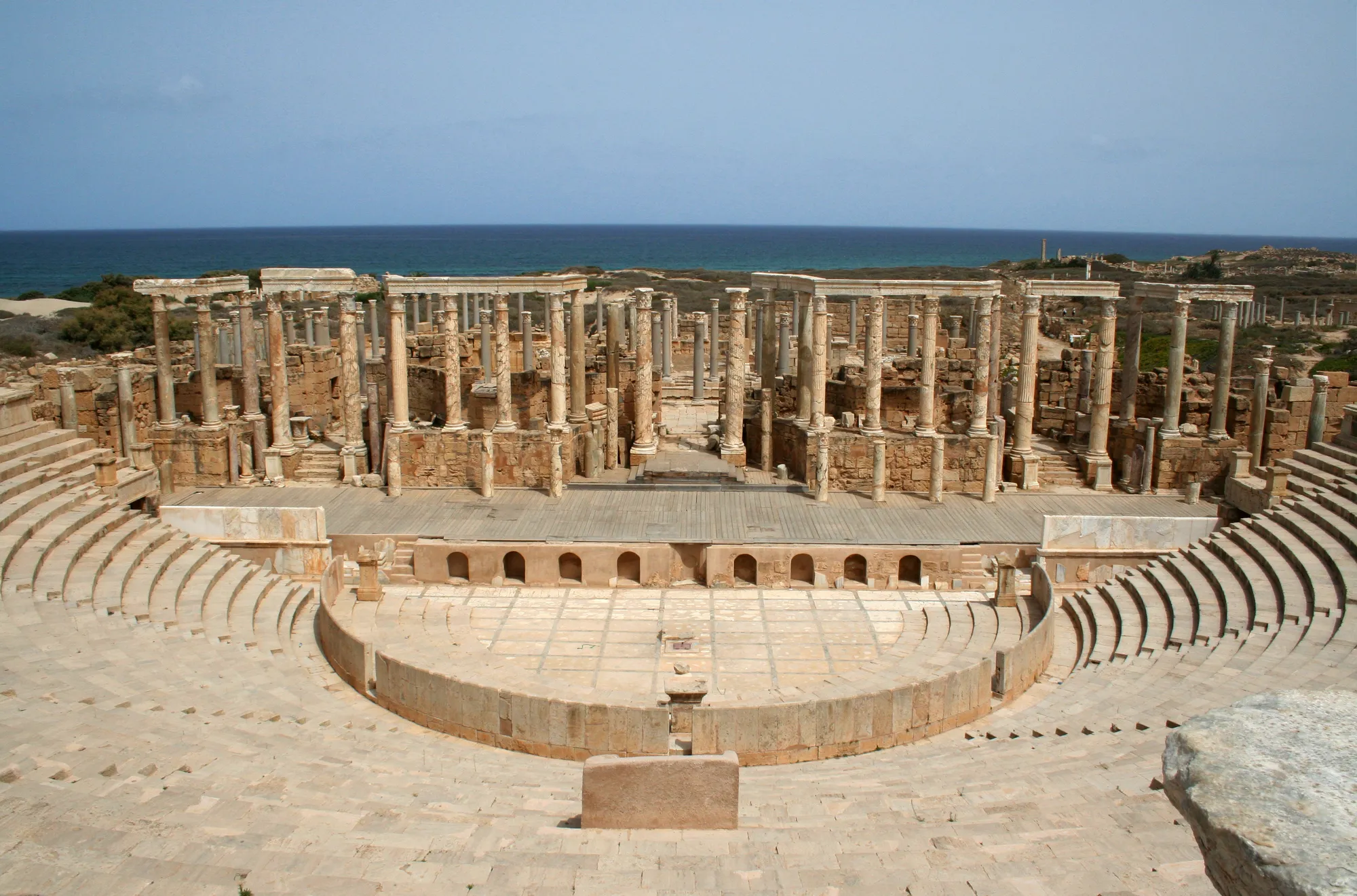
Roman theatre of Leptis Magna facing the Mediterranean

Leptis Magna is the most complete Roman city on the Mediterranean, and for many guests the reason they come to Libya. It grew rich on olive oil and reached its height under Septimius Severus, the emperor born here in AD 145, who rebuilt his home town in marble.

Walk through the four-way Arch of Septimius Severus, under the Medusa heads of the Severan Forum, into the Hadrianic Baths and down to the theatre, the market and the amphitheatre on the shore. Give it two days: one is never enough.
Where
130 km east of Tripoli, near Khoms
UNESCO
World Heritage Site since 1982
Time needed
One to two full days
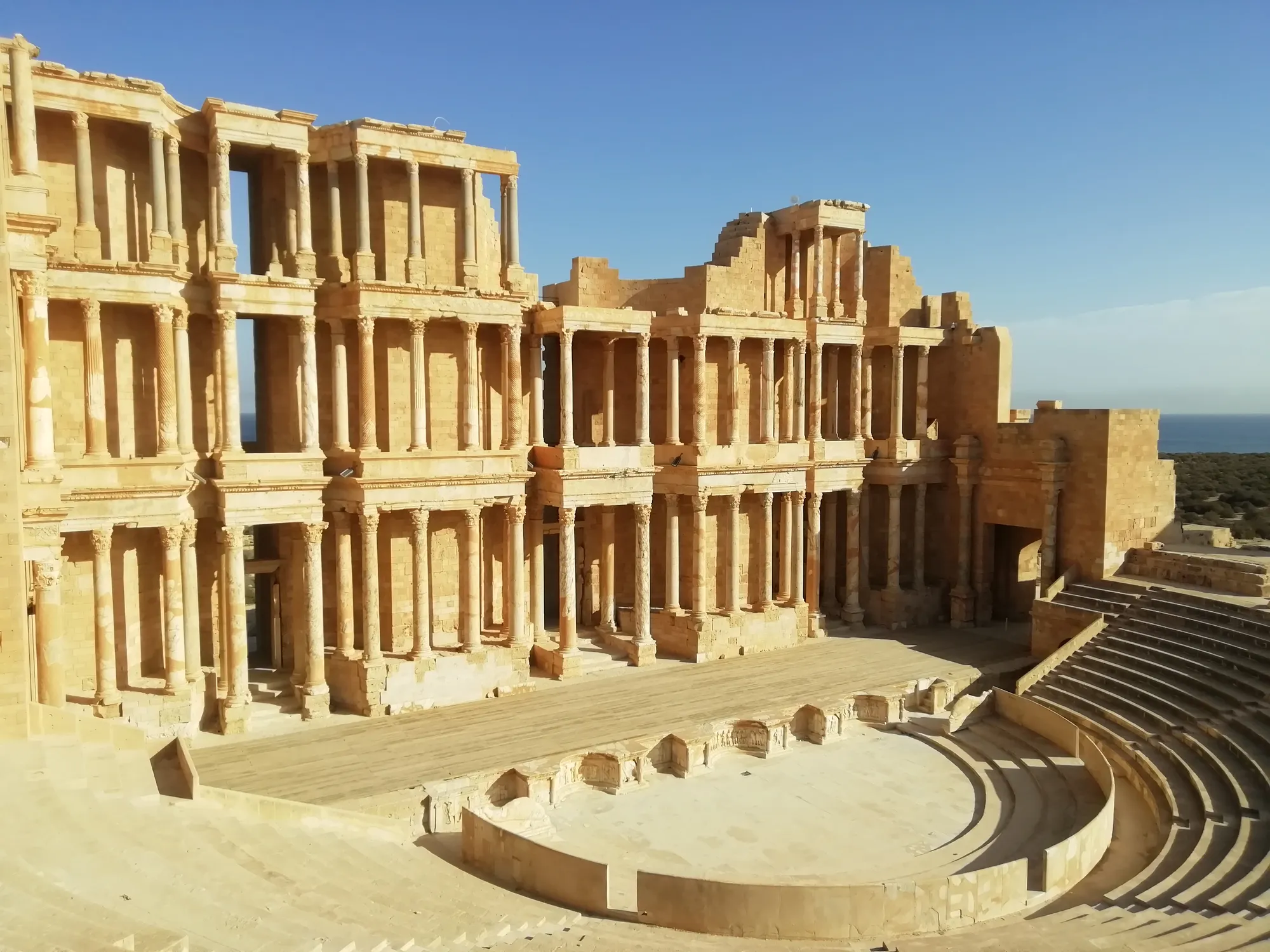
Stage wall of the Roman theatre at Sabratha

Sabratha began as a Phoenician trading post and became a prosperous Roman port. Its late second-century theatre is the showpiece: a stage wall rising three storeys in columns, with carved reliefs of gods and comic actors along the front of the stage.

Beyond the theatre, the Temple of Isis stands on a headland above the waves, and the museum keeps the floor mosaics of the Basilica of Justinian. Few Roman sites anywhere sit this close to the water.

Where
70 km west of Tripoli
UNESCO
World Heritage Site since 1982
Time needed
Half a day to a full day
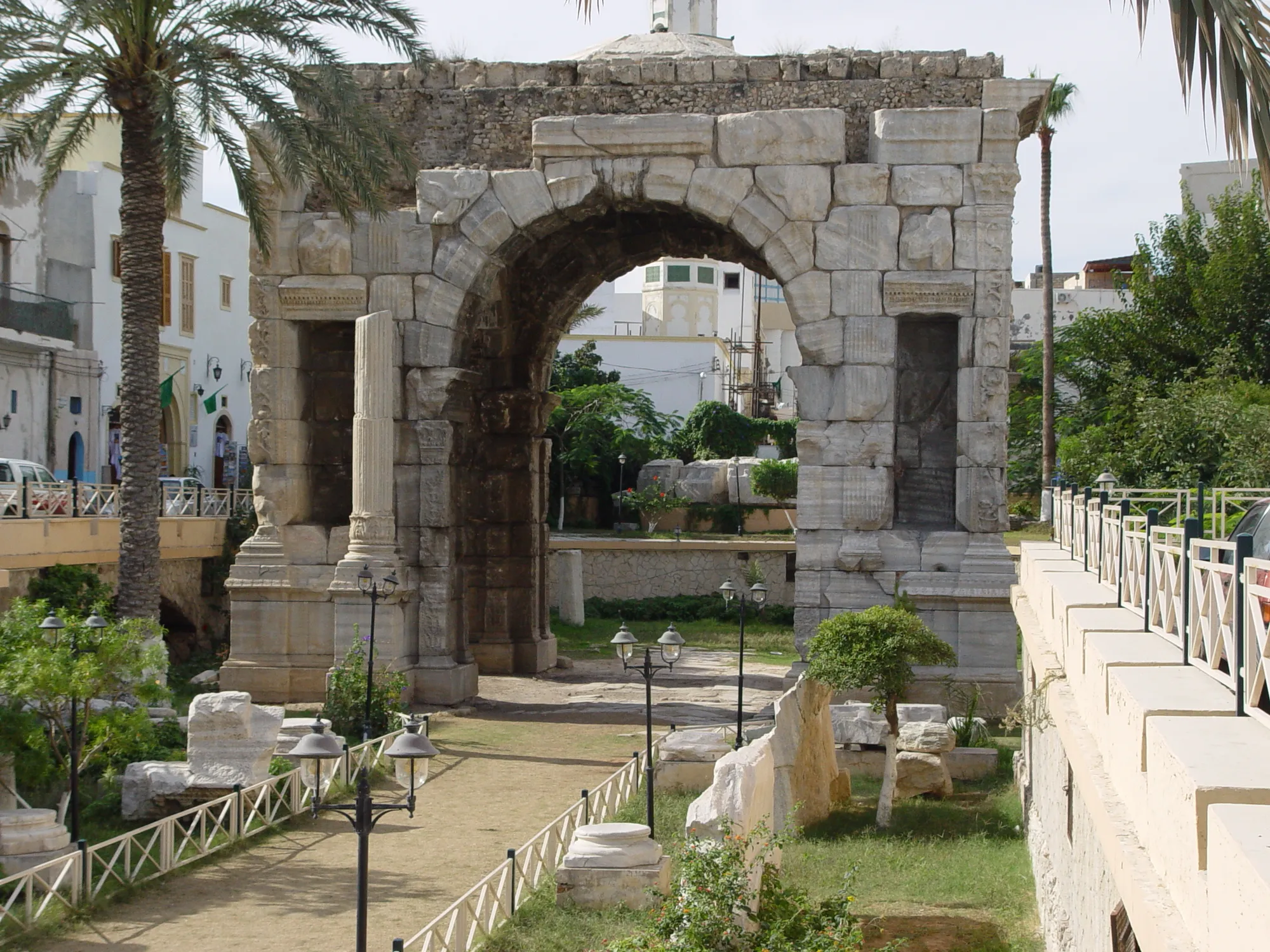
Arch of Marcus Aurelius, Tripoli, Libya

Tripoli’s medina is a living neighbourhood inside Ottoman walls, not a museum. At its northern edge stands the Arch of Marcus Aurelius, built in AD 163, the only Roman monument still standing in the city.

Inside, the tiled Gurgi Mosque, the Ottoman clock tower and the souqs for copper, gold and fabric are still in daily use. Your guide will take you into workshops and courtyards you would never find alone.

Where
Central Tripoli, beside the Red Castle
Highlights
Arch of Marcus Aurelius, Gurgi Mosque, souqs
Time needed
One full day
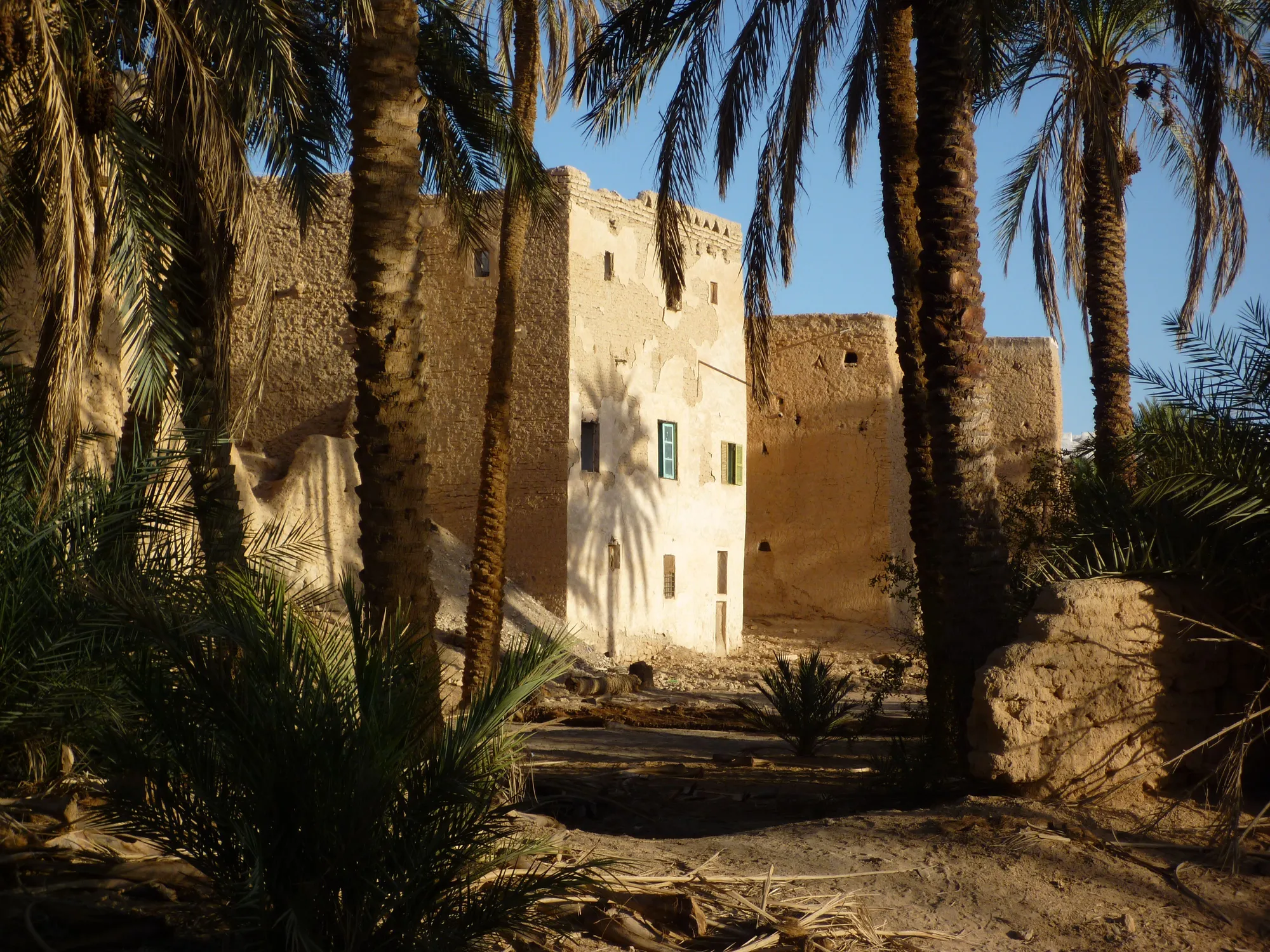
Mud-brick architecture and palm groves in Ghadames

Ghadames is an oasis town near the point where Libya, Algeria and Tunisia meet. Its old town is built as a single structure: covered alleys keep the streets cool, while the rooftops form a second network of walkways once used by the women of each household.

Families have now moved to the new town, but many still keep their old houses, with whitewashed walls, painted interiors and copper pots on the shelves. We arrange a lunch in one of them.

Where
About 600 km south-west of Tripoli
UNESCO
World Heritage Site since 1986
Time needed
Two nights
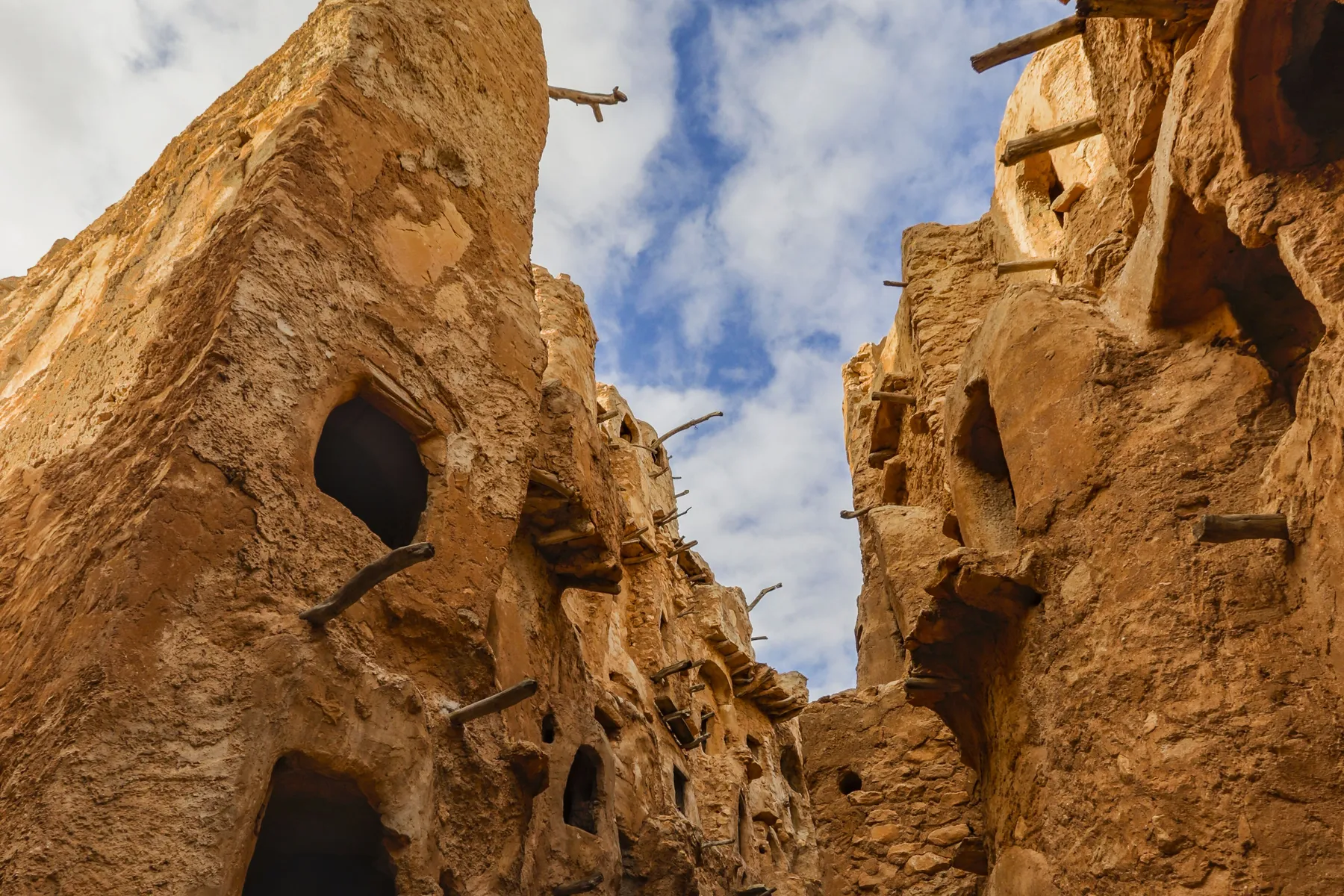
The old hilltop qasr of Nalut in the Nafusa Mountains

Nafusa Mountains

The Jebel Nafusa is a range of hills south-west of Tripoli and the heartland of Libya’s Amazigh people. Its villages are known for their fortified granaries, called qasrs, built to store the harvest safely.
Qasr al-Haj has a circular courtyard, Nalut’s qasr stands on the cliff edge and Kabaw keeps its granary above the village. We visit on the way to Ghadames, or as a day out on the West Libya tour.
Where
150 to 250 km south-west of Tripoli
Highlights
Nalut, Qasr al-Haj, Kabaw
Time needed
One day

The East

برقة

Cyrenaica: the Greek world of the Green Mountain. Reached by flight or road to Benghazi, with an additional regional permit.

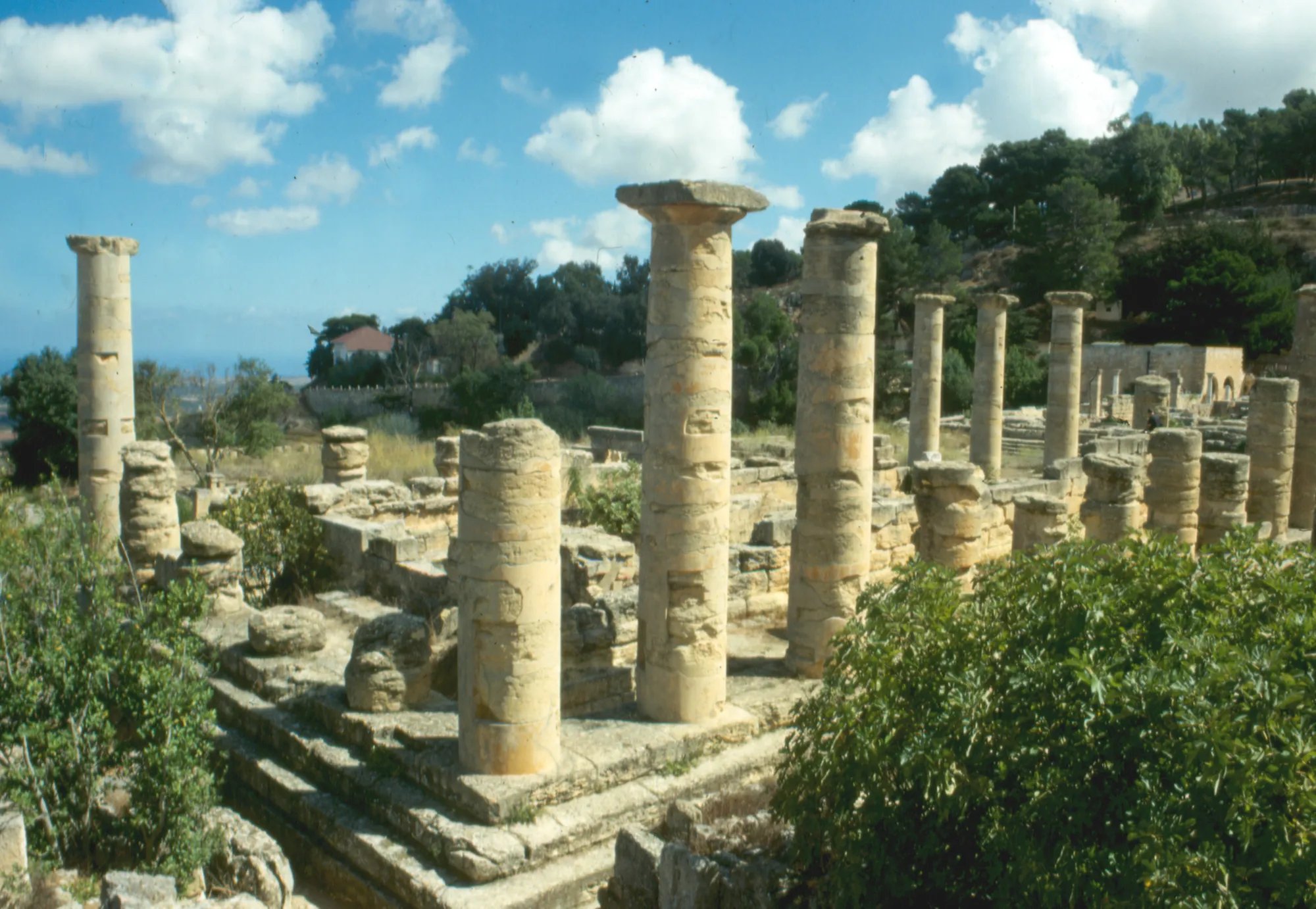
Temple of Apollo at Cyrene, eastern Libya

Greek settlers from the island of Thera founded Cyrene in 631 BC on a limestone terrace of the Jebel Akhdar, the Green Mountain. It became one of the great cities of the Greek world, and its Temple of Zeus is larger than the Parthenon in Athens.

Below the Sanctuary of Apollo, a road winds down through ancient tombs cut into the hillside to Apollonia, the city’s port. Nearby Ptolemais and the Byzantine mosaics of Qasr Libya complete the picture.

Where
Shahat, about 220 km east of Benghazi
UNESCO
World Heritage Site since 1982
Time needed
One to two days, with Apollonia
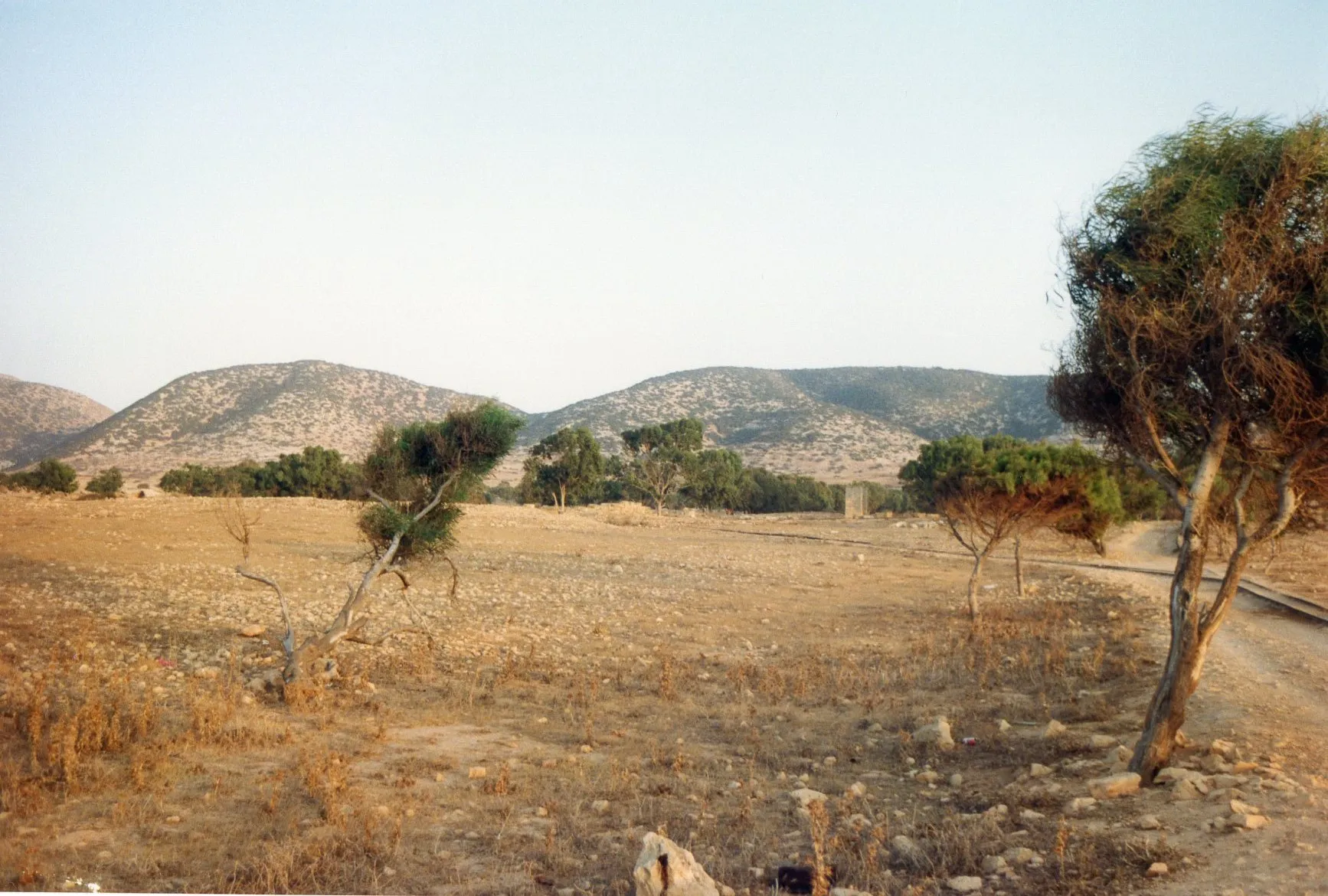
Ruins of the ancient Greek city of Ptolemais on the eastern Libyan coast

Apollonia and Ptolemais

Ptolemais and Apollonia are two of the five Greek cities of the Pentapolis on Libya’s eastern coast. Ptolemais, at Tolmeita, has the Palace of the Columns and vast Roman cisterns.
Apollonia, at Susa, was the port of Cyrene, with Byzantine churches, a theatre by the sea and a harbour now under the water. Each is a half-day visit on our East Libya tour.
Where
Tolmeita and Susa, eastern coast
Pentapolis
Two of its five cities
Time needed
Half a day each
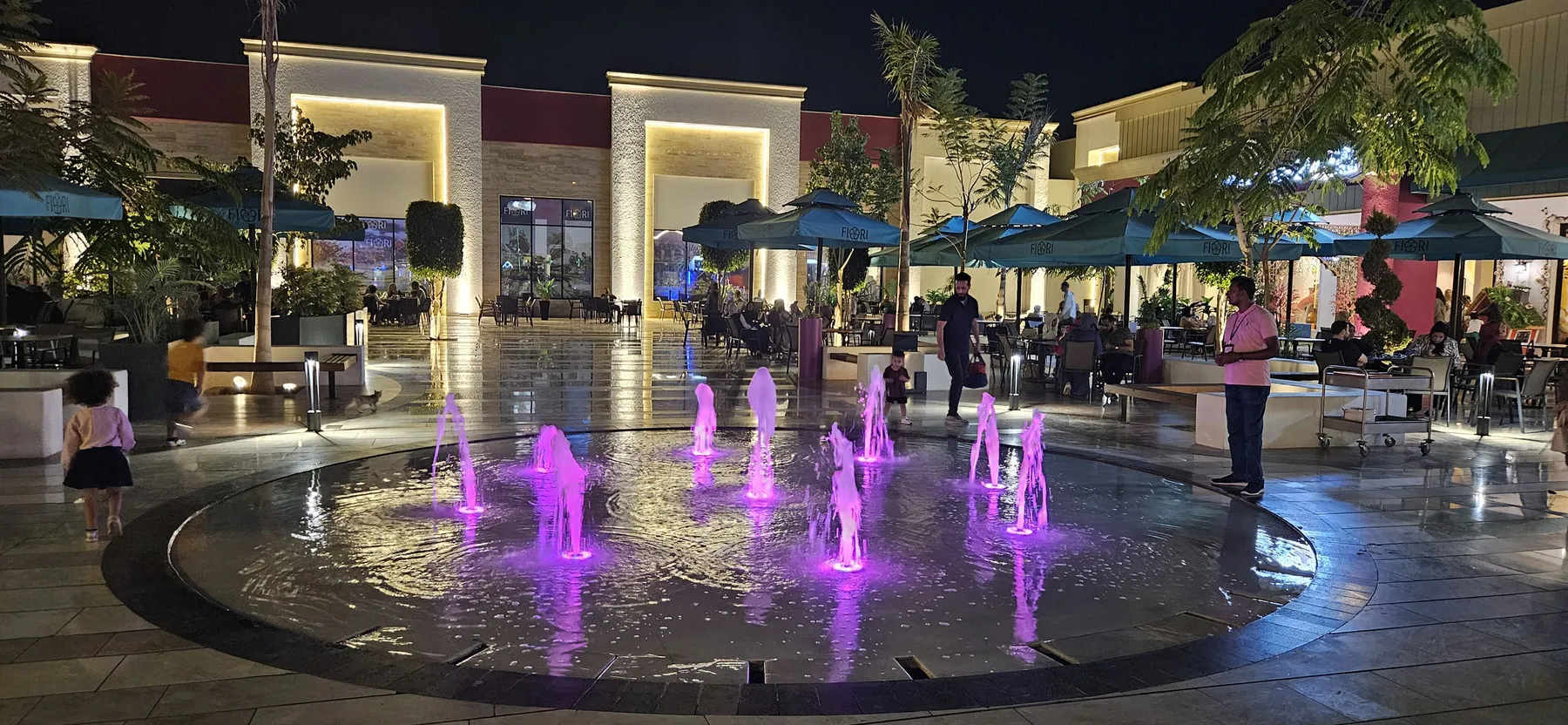
Fiori Square in Benghazi, eastern Libya

Benghazi

Benghazi is Libya’s second city and the starting point for every trip to the east. Most visitors pass straight through on their way to Cyrene, but it rewards a day: the rebuilt old centre and its markets, and the corniche at sunset.
Easy trips from the city reach the Greek ruins of Tocra and the mosaics of Qasr Libya. Eastern travel needs a regional permit, which we arrange.
Region
The East (Cyrenaica)
Airport
Benina International
Time needed
One day

The South

فزان

Fezzan: rock art, sand seas and volcanic lakes. Expeditions only, by 4×4 with permits and an experienced desert crew.

Sandstone towers and dunes of the Acacus Mountains

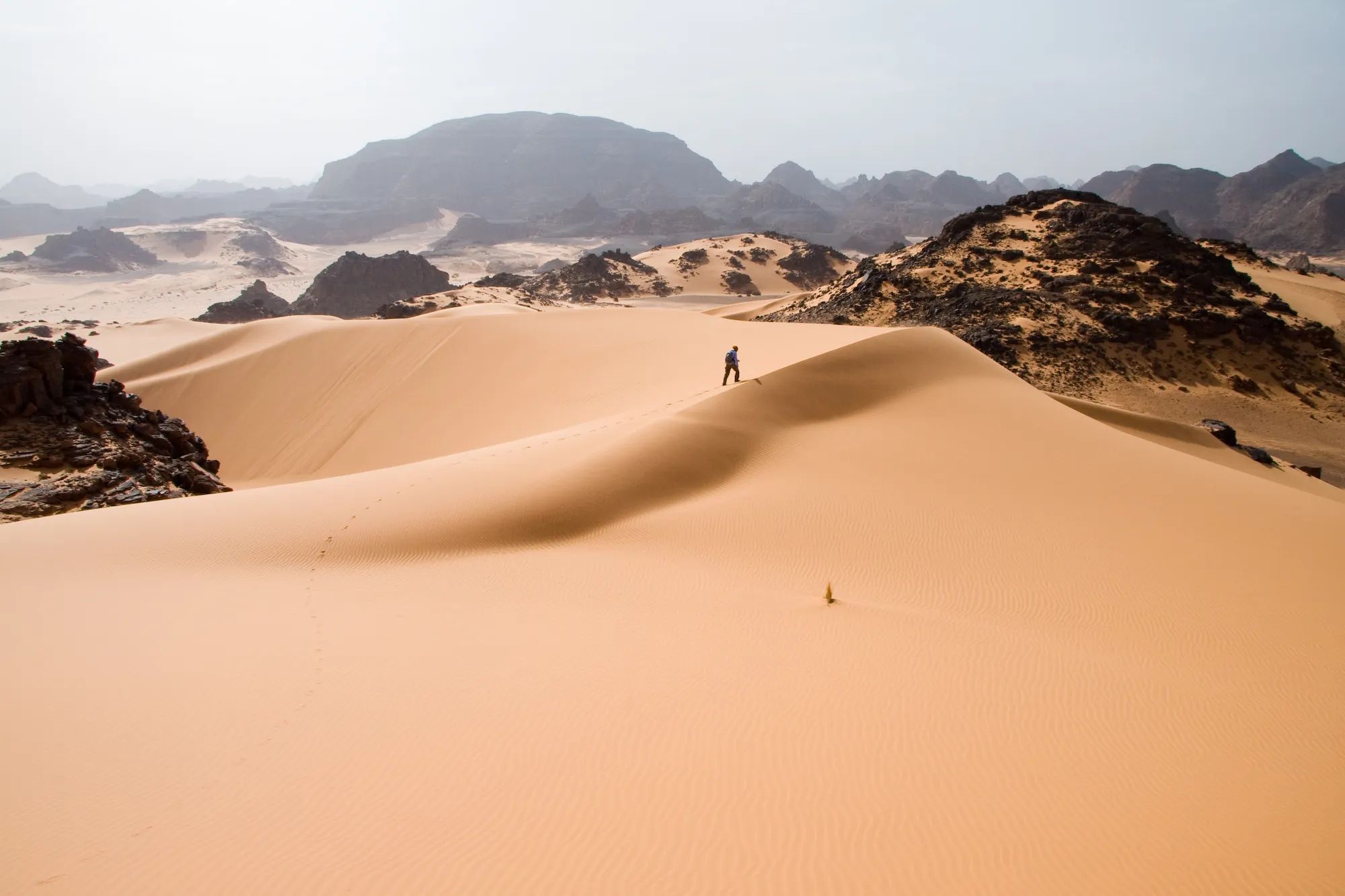
The Tadrart Acacus is a range of black and orange sandstone towers, arches and canyons on the edge of the Sahara near Ghat. On its rock walls are thousands of paintings and engravings, some around 12,000 years old.

They record a Sahara that was once green: giraffes, elephants, herds of cattle, hunters and dancers. You reach the Acacus by 4×4 and sleep in camps among the dunes, with a Tuareg guide who knows every valley.

Where
South-west Libya, near Ghat
UNESCO
World Heritage Site since 1985
Time needed
Three to four days
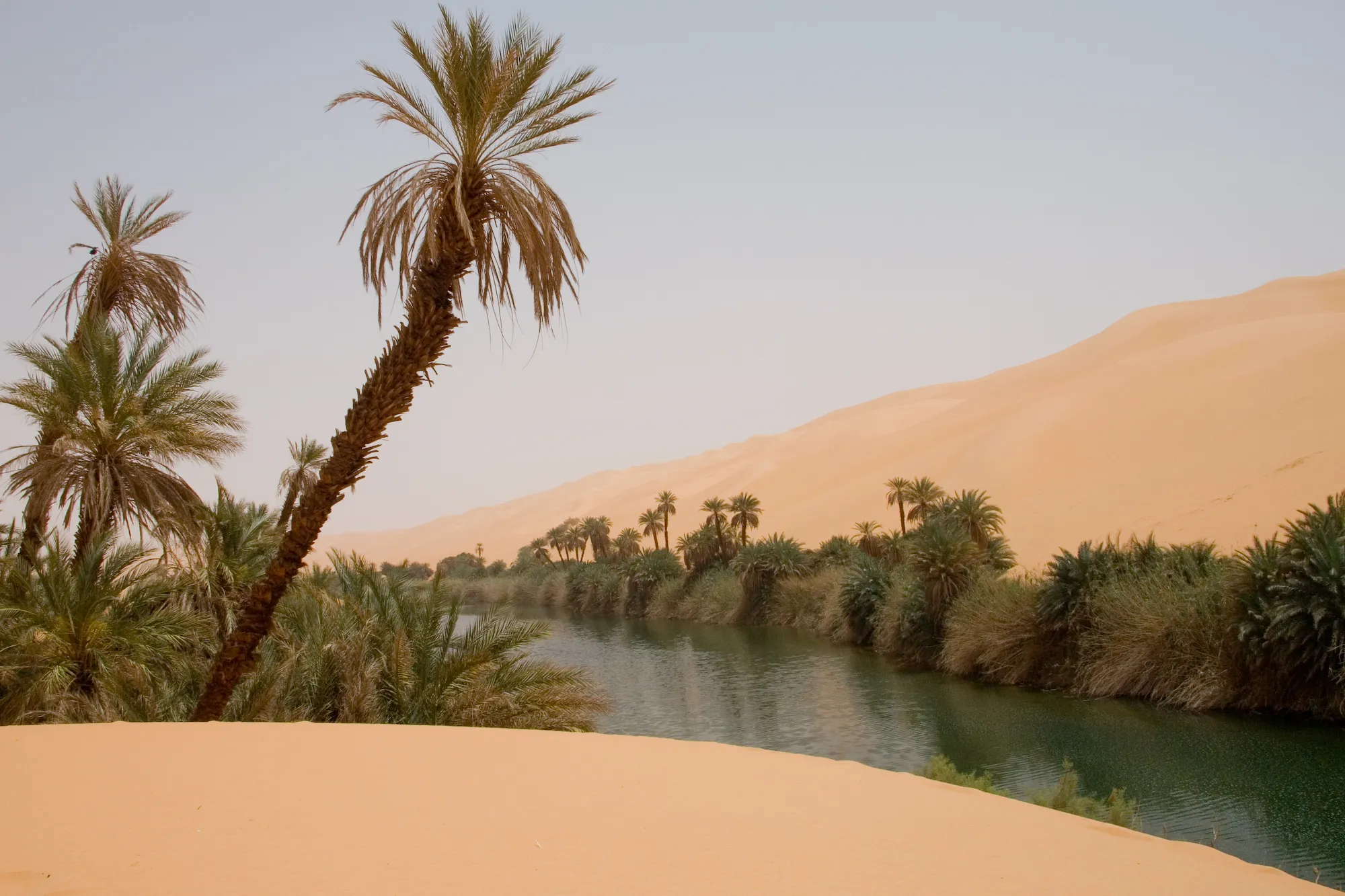
Palm-fringed lake in the Ubari Sand Sea

In the middle of the Ubari Sand Sea, a handful of lakes lie between dunes more than 100 metres high. Gaberoun and Um al-Maa are ringed by date palms and reeds, their water saltier than the sea, so you float without effort.

Arrive in the afternoon, climb the dune above the lake for sunset, and sleep in camp close to the shore.

Where
Ubari Sand Sea, north of Ubari
Best months
November to February
Time needed
One night
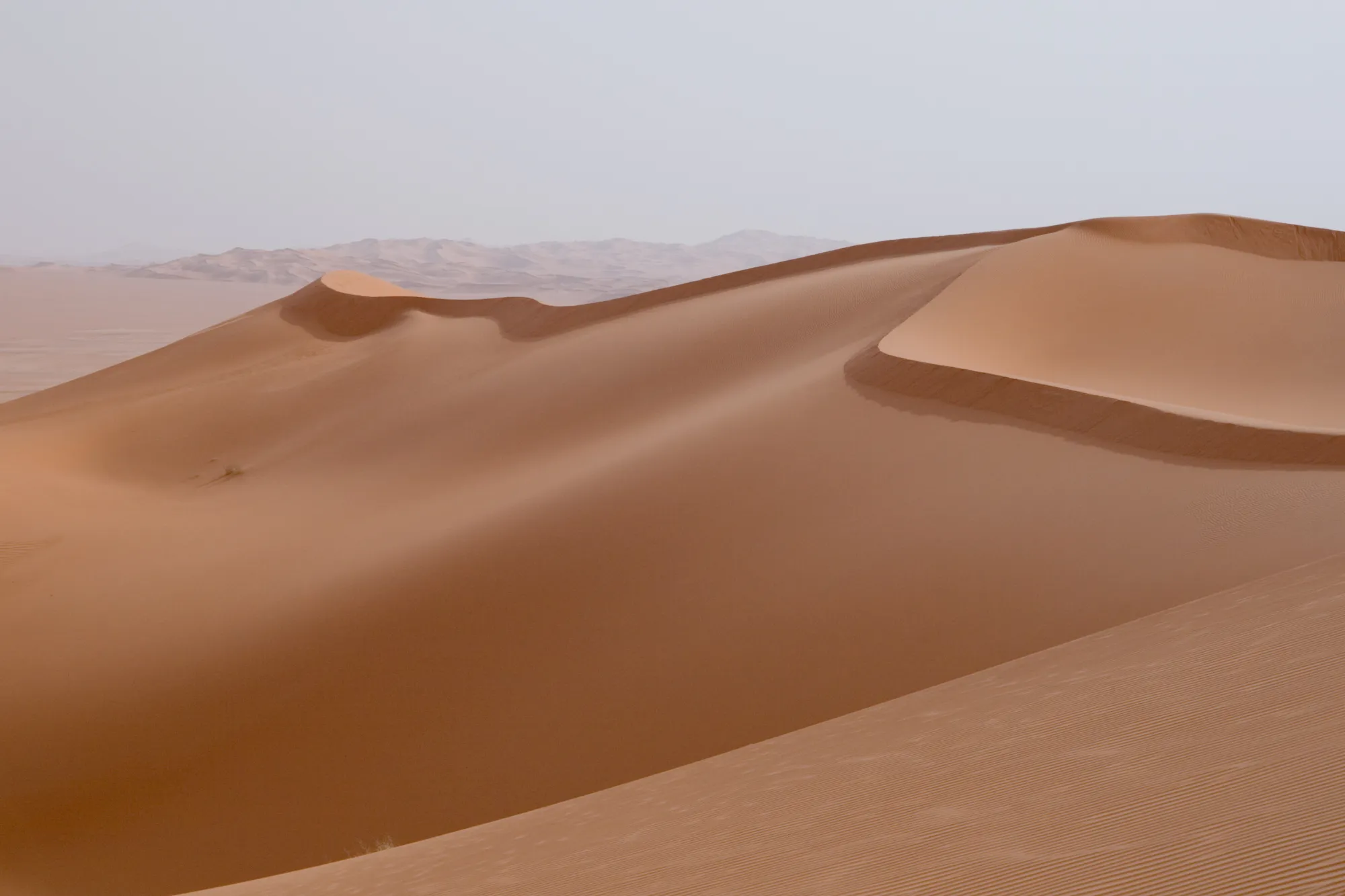
Dunes of the Idehan Ubari in southern Libya

Waw an Namus is a volcanic caldera in the middle of the Sahara, hundreds of kilometres from the nearest town. A black cone rises from the crater floor, ringed by small lakes of green, blue and red water.

Getting here takes long days of off-road driving and careful planning, which is why very few people have ever seen it. It is the most remote place we go, and the one guests talk about most.

Where
Central Sahara, south-east of Sebha
Access
Long off-road days by 4×4
Time needed
Two to three days including travel
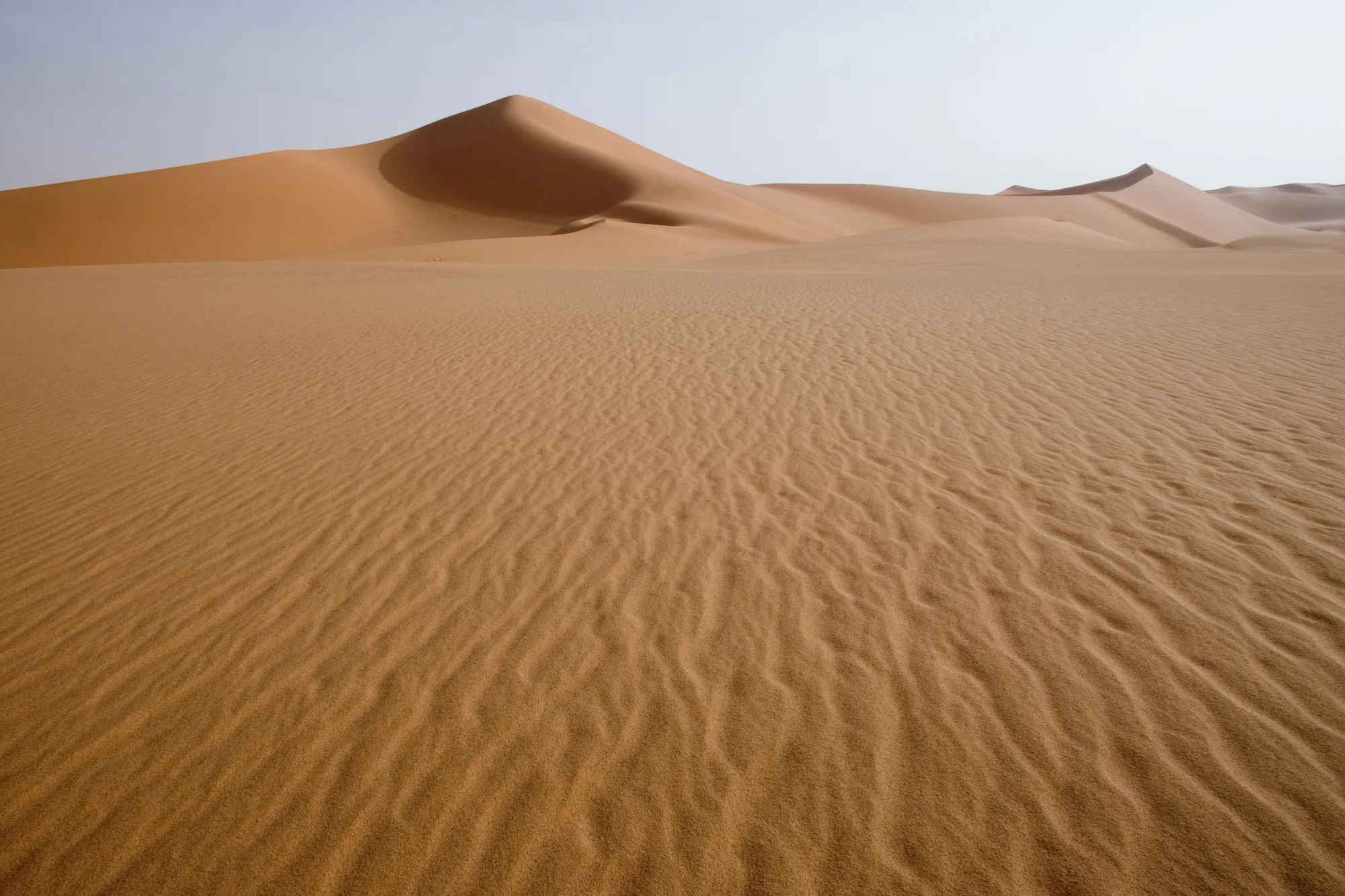
Open Libyan desert under a clear sky

Libyan Sahara

The Sahara covers about nine-tenths of Libya. Its most rewarding corner for travellers is the Fezzan in the south-west, home to the rock art of the Acacus Mountains, the palm-ringed Ubari Lakes and the volcanic crater of Waw an Namus.
The desert is visited only by 4×4 expedition, with permits, between November and February.
Region
The Fezzan, south-west Libya
Best months
November to February
Time needed
At least a week

Choose the places, and we will build the route between them

Every destination on this page is on one of our tours. Want a combination we do not list? Tell us which places matter most and we will plan a private route around them.

Scroll to Top