Pompeii is the most famous Roman site in the world. Leptis Magna is one of the least visited. Which should you see? Ideally both, for different reasons.
How each city survived
Pompeii was buried in a single day by the eruption of Vesuvius in AD 79, which is why it preserves ordinary life so vividly: bakeries, graffiti, frescoes and the casts of its people. Leptis Magna was abandoned slowly after the Roman era and covered by drifting sand, which protected its stone monuments rather than its daily life.
Scale and grandeur
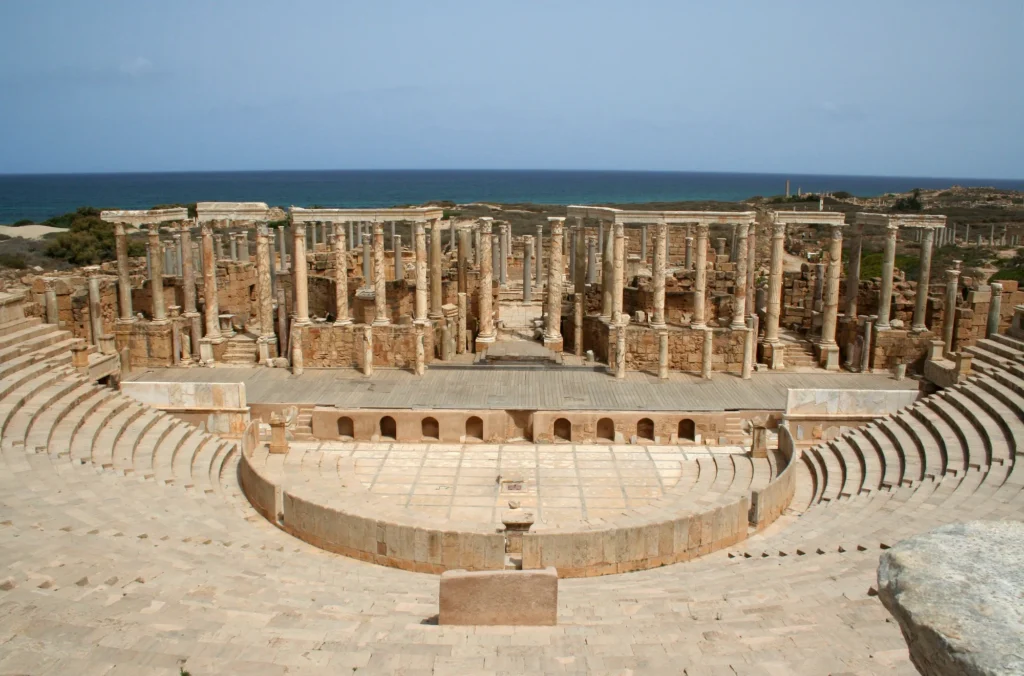
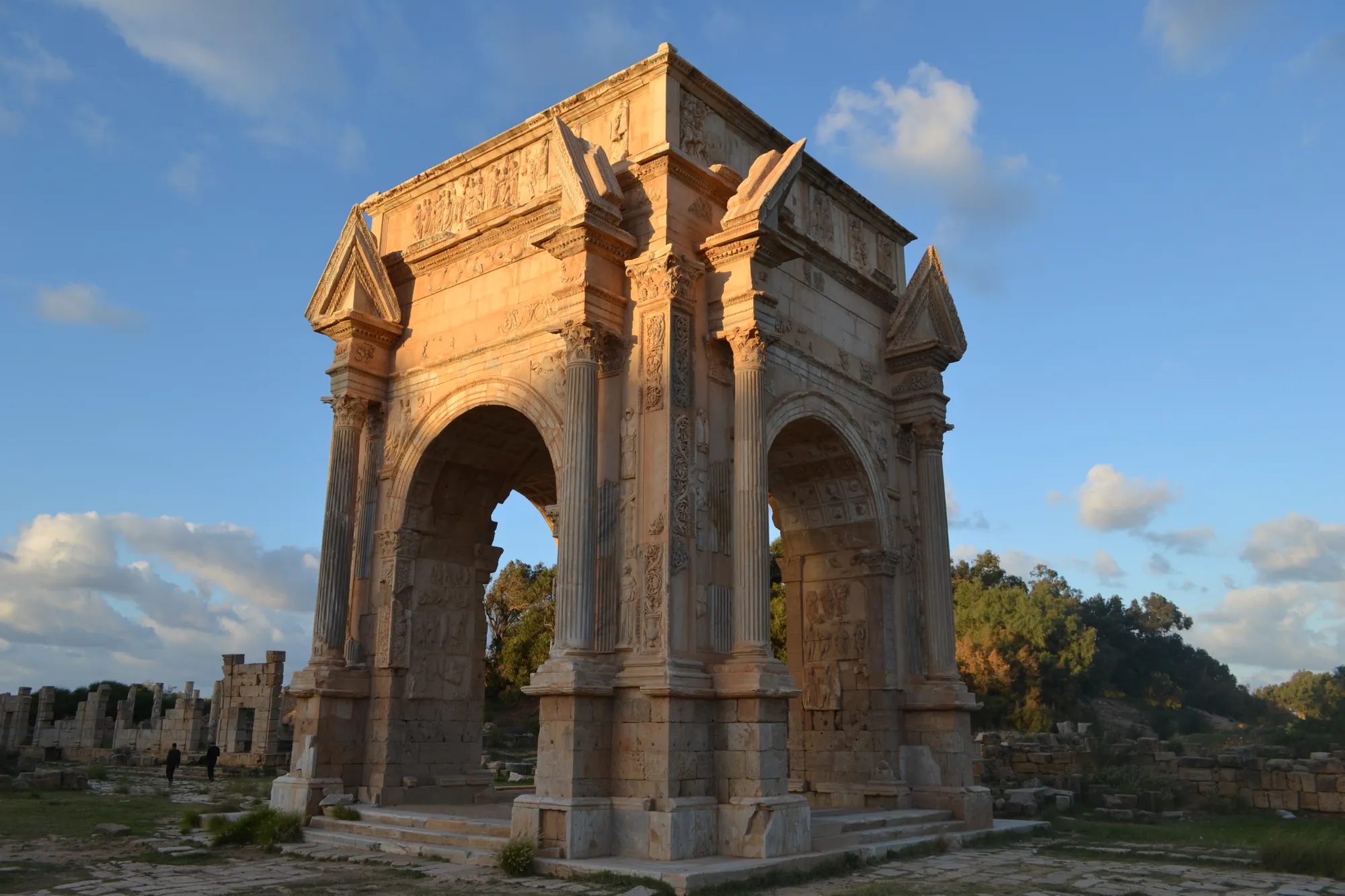
Leptis Magna is a city of monuments. Septimius Severus, born here in AD 145, rebuilt it in marble: a four-way triumphal arch, a vast forum and basilica, a theatre, a market, a harbour and an amphitheatre. Pompeii is a provincial town frozen in time; Leptis is an imperial showpiece.
Crowds
Pompeii receives millions of visitors a year, and in summer its main streets are shoulder to shoulder. At Leptis Magna you may be one of a handful of people on site. That changes how it feels: you can sit in the theatre and hear the sea.
At Pompeii you see how Romans lived. At Leptis Magna you see what they wanted the world to think of them.
Setting
Pompeii sits inland beneath Vesuvius. Leptis Magna runs right down to the Mediterranean, and the theatre, harbour and amphitheatre all face the water.
Our verdict
See Pompeii for the human story. See Leptis Magna for scale, silence and the sea. If you have seen Pompeii, Leptis will not feel like a repeat. If you have not, it may spoil you for it.