Ghat · Acacus Mountains · Ubari Lakes · Waw an Namus
Ten days in the deep Sahara by 4×4.
10 days · November to February
Price on request
واو الناموس
Waw an Namus is a volcanic crater in the central Libyan Sahara, several hundred kilometres from the nearest town. A black cone rises from the crater floor, ringed by small lakes of green, blue and red water, and a field of black ash surrounds it for kilometres. It is reached only by long days of 4×4 driving, on our Sahara expedition.
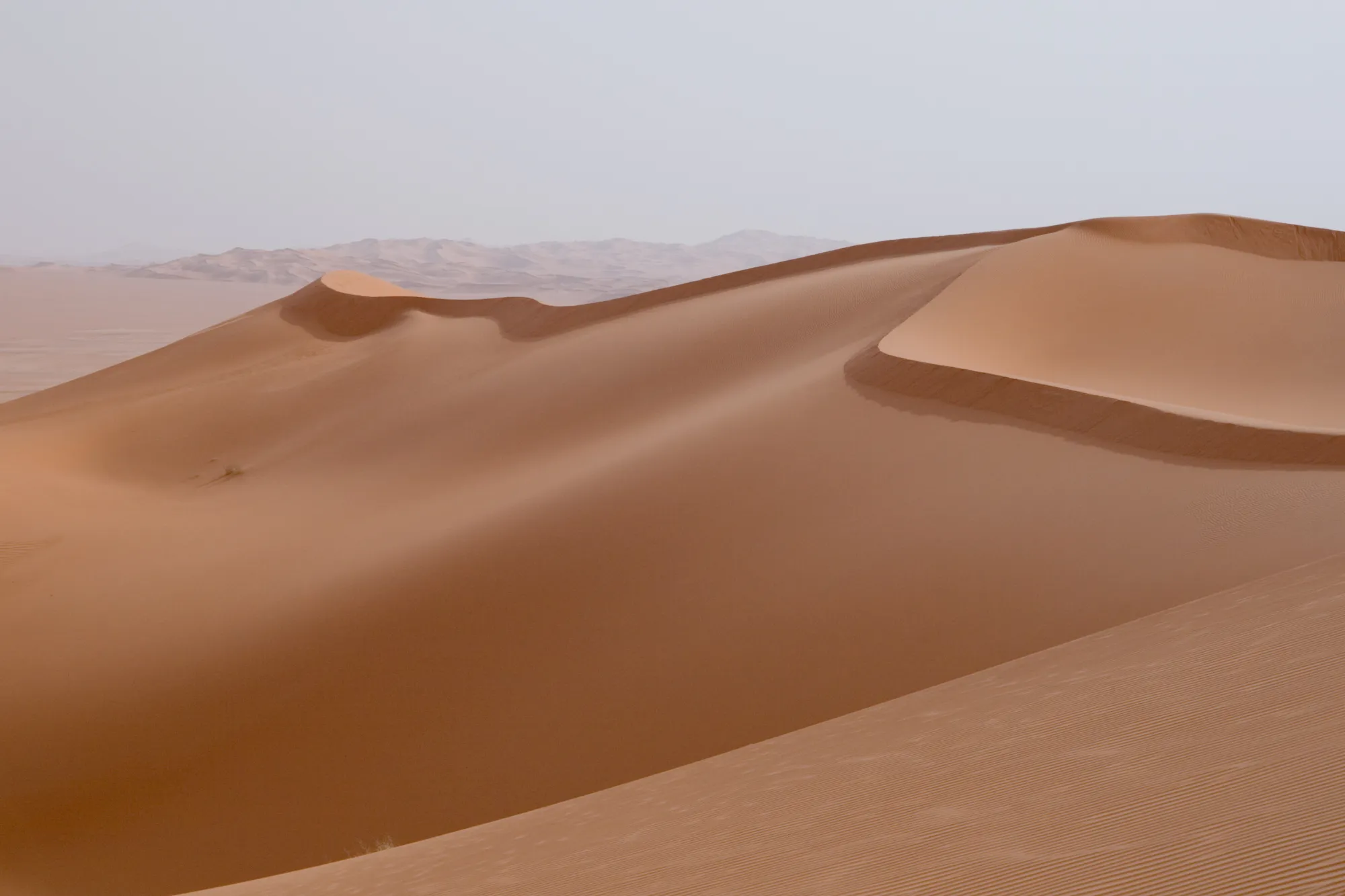
There is nothing at Waw an Namus except the crater itself, and that is the point.
The first view after hours of open desert: a caldera about four kilometres across, sunk into a plain of black ash.
A volcanic cone rising from the crater floor. The climb is steep and loose, and the view from the top takes in the whole caldera.
Small lakes around the cone, their water tinted green, blue and red by algae and minerals, edged with reeds and palms.
Black volcanic ash spread over the sand for kilometres around the crater, visible from far away.
Waw an Namus means, roughly, the oasis of mosquitoes, after the insects that breed around its lakes. The volcano is young by geological standards, and the water that feeds its lakes rises from deep underground in one of the driest places on Earth.
Its remoteness has kept it almost untouched. There are no buildings, no signs and no other visitors, only the tracks of your own vehicles in the ash.
It is the most remote place we go, and the one guests talk about most.
Practical notes from our team in Tripoli, who plan every visit here.
Several long days of off-road driving across open desert, as part of a Sahara expedition.
November to February. Mosquitoes are fewer in the coolest months.
Two to three days, including the drive in and out.
Desert camp near the crater.
Sturdy shoes for the cone, a warm layer for the nights and insect repellent.
Ghat · Acacus Mountains · Ubari Lakes · Waw an Namus
Ten days in the deep Sahara by 4×4.
Any region we operate in, at your pace
Your own guide, driver and escort.
Something else on your mind? Ask us on WhatsApp and a member of the team will reply.
There has been no eruption in recorded history. It is considered dormant, and the crater is safe to walk in.
Only by 4×4, across several hundred kilometres of open desert, with an experienced crew, spare fuel, water and satellite contact.
We do not recommend it. The lakes are small and fragile, and we ask guests to leave them as they find them.
Algae and dissolved minerals give each lake its own colour, which also changes with the light during the day.
Tell us your dates and what you want to see. Within 24 hours our team in Tripoli will reply with a route, a clear price and an honest view of what is possible.