Tripoli · Sabratha · Jebel Nafusa · Leptis Magna
The classic first journey into Libya.
7 days · October to April
Price on request
طرابلس
Tripoli is Libya’s capital and the starting point of every trip to the west. Its walled old city is a living neighbourhood of souqs, mosques and Ottoman houses, entered past the Arch of Marcus Aurelius and the Red Castle on the harbour. Plan at least one full day here, with a guide who knows the medina’s workshops and courtyards. Planning a visit? Read is Tripoli safe and our Tripoli Mitiga Airport guide.
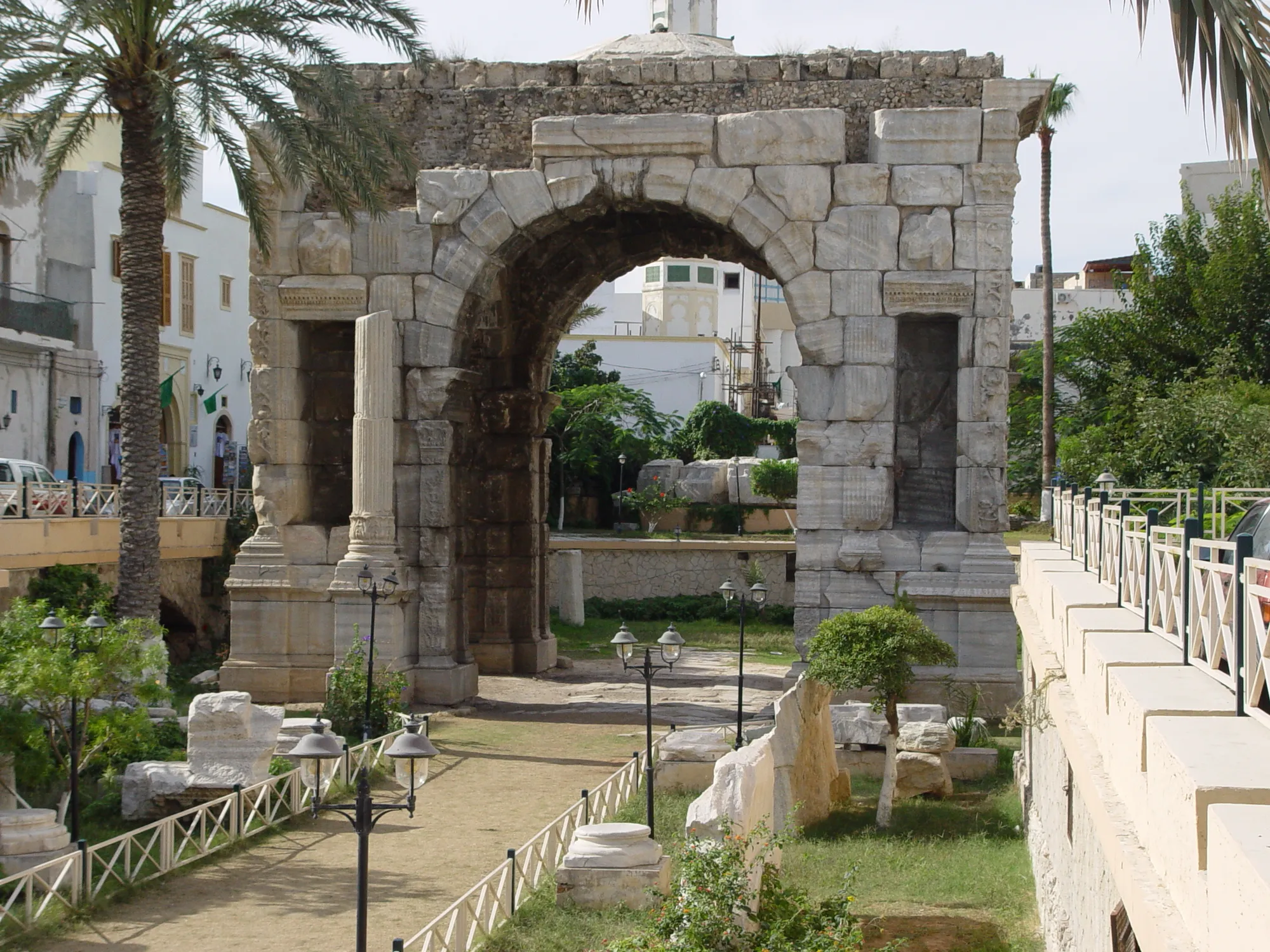
Most of what matters in Tripoli lies within a short walk of the old city walls.
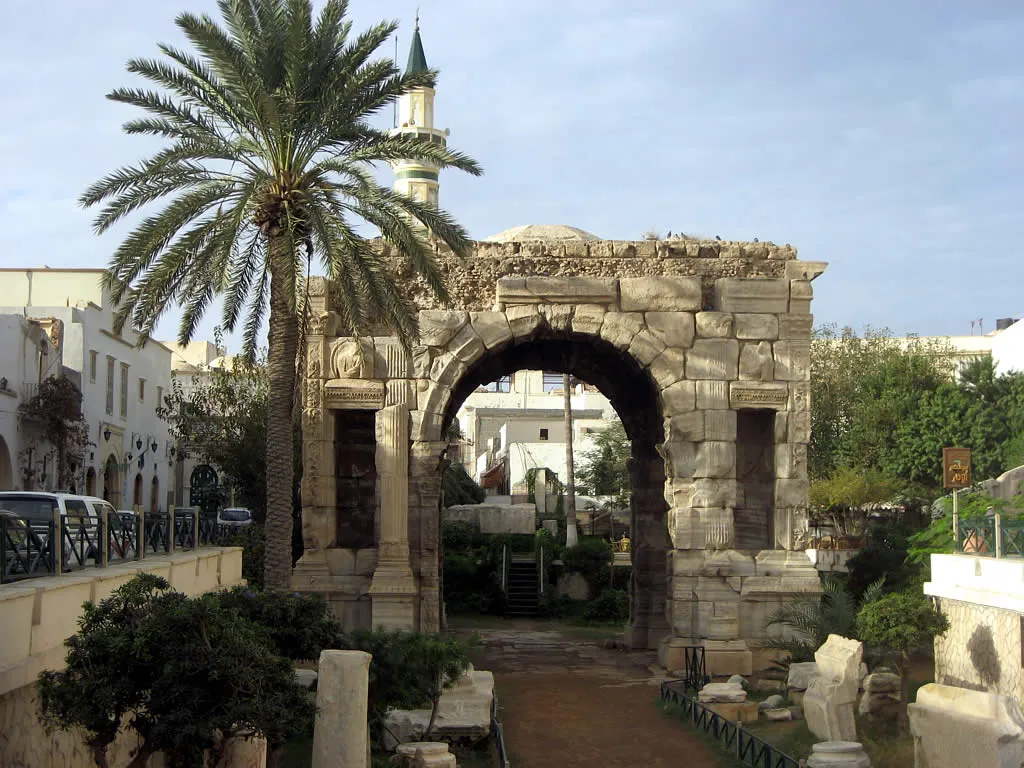
A four-way marble arch built in AD 163, the only Roman monument still standing in the city. The streets around it have risen so much that you look down on its base.
The fortress on the harbour, rebuilt by Spanish knights and Ottoman governors over Roman foundations. It houses Libya’s national museum; we will tell you whether it is open when you travel.
The medina inside the Ottoman walls: the tiled Gurgi Mosque, the clock tower, the Karamanli house and lanes of craftsmen still at work.
Copper beaten by hand, gold sold by weight, fabric for wedding dresses and spice stalls, each trade in its own street.
The Italian-era square at the edge of the old city, and the evening walk along the corniche.
Tripoli began as Oea, a Phoenician trading post, and became one of the three cities, the tri-polis, that gave the region its name, alongside Sabratha and Leptis Magna. Romans, Vandals, Byzantines, Arabs, Spanish knights, the Knights of St John and Ottoman governors all held the harbour in turn.
The old city you walk through today is largely Ottoman, from the sixteenth to the nineteenth centuries, with Italian streets wrapped around it from the colonial period. Unlike many medinas in North Africa, it is still mainly home to Libyan families rather than shops for visitors.
Look down at the base of the arch. The city has risen around it by almost two metres since AD 163.
Practical notes from our team in Tripoli, who plan every visit here.
Mitiga International Airport, about 10 km from the old city. Most guests connect through Istanbul, Tunis or Malta.
October to May. Summer is hot and humid but workable, with sightseeing early and late.
One full day for the old city; two if you want the museum and the seafront at an easy pace.
With your guide, driver and escort. The old city itself is best on foot.
Sabratha is 70 km west and Leptis Magna about 130 km east, both easy day trips.
Tripoli · Sabratha · Jebel Nafusa · Leptis Magna
The classic first journey into Libya.
Tripoli medina · Leptis Magna · Sabratha
One guided day, escort and permits included.
Tripoli · Leptis Magna · Sabratha · Benghazi · Cyrene · Apollonia
Both halves of Libya in one journey.
Something else on your mind? Ask us on WhatsApp and a member of the team will reply.
With a guide and escort, yes. The old city is a residential neighbourhood, busy with families and traders. Every guest on our tours walks it with a Libyan guide and the tourist police escort required by law.
It was built in AD 163 to honour the emperors Marcus Aurelius and Lucius Verus, and is the only Roman monument still standing in Tripoli.
Assaraya al-Hamra, the fortress on the harbour. It has been rebuilt many times since Roman days and is home to Libya’s national museum.
Yes. Our Tripoli medina walk is a full guided day with hotel pick-up, escort and lunch in the old city.
Tell us your dates and what you want to see. Within 24 hours our team in Tripoli will reply with a route, a clear price and an honest view of what is possible.