Tripoli · Sabratha · Jebel Nafusa · Leptis Magna
The classic first journey into Libya.
7 days · October to April
Price on request
لبدة الكبرى
Leptis Magna is the largest and best-preserved of Libya’s Roman ruins, 130 km east of Tripoli near Khoms. Emperor Septimius Severus was born here in AD 145 and rebuilt the city in marble. Its arch, forum, baths, theatre, market and amphitheatre still stand by the sea. Give it two days if you can; one is never enough.
The site covers a whole city, from the arch on the old road to the harbour and the amphitheatre on the shore.
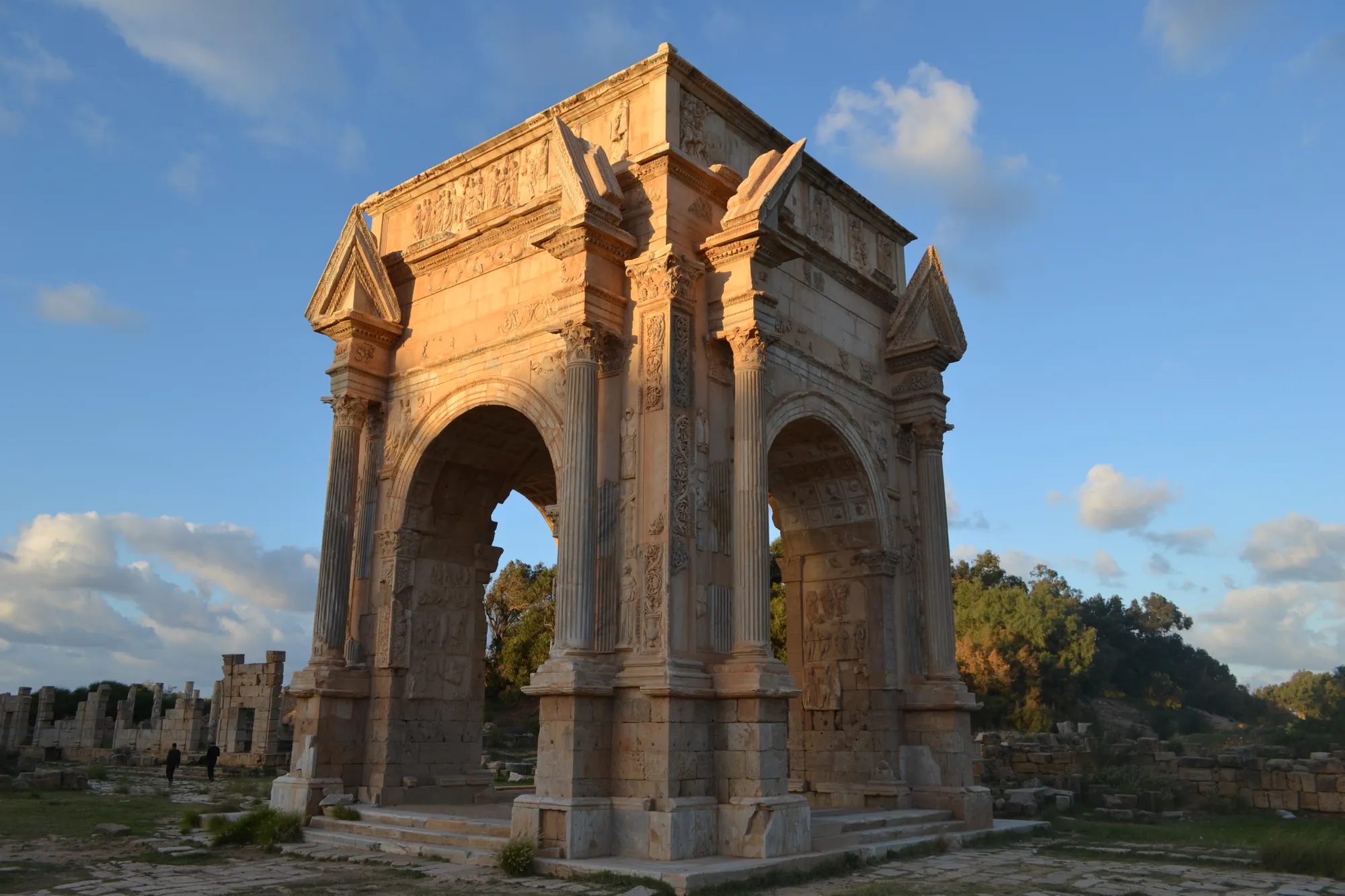
A four-way arch raised for the emperor’s visit in AD 203, carved with scenes of his triumph and his family.
Hot and cold rooms, a swimming pool and the remains of the marble that once covered every wall.
A vast colonnaded square with the stone heads of Medusa set between its arches, and the great basilica beside it.
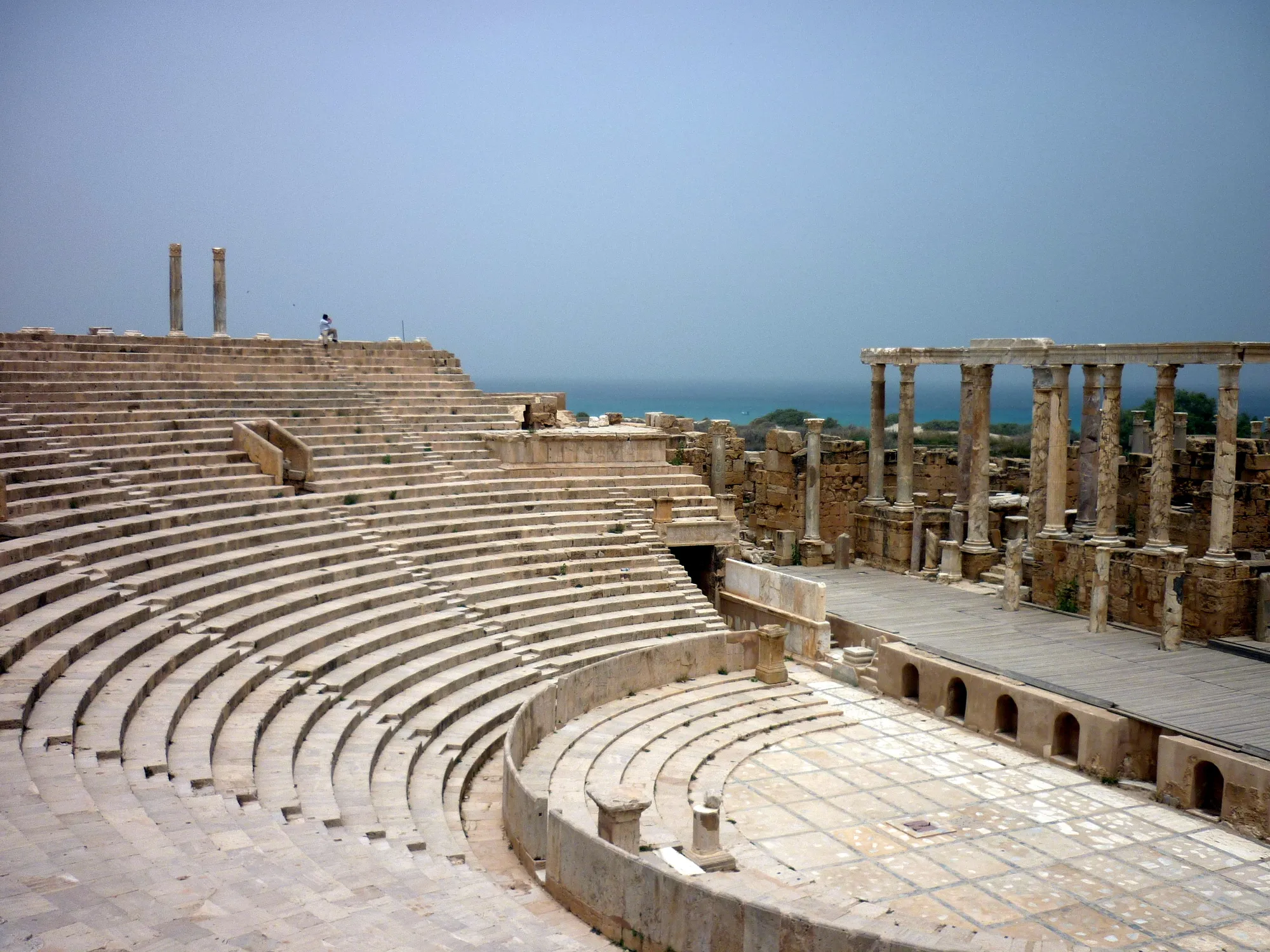
A theatre facing the sea, built in AD 1, and the market where the stone table used to check traders’ measures still stands.
The silted Severan harbour, its lighthouse base and mooring stones, and the amphitheatre cut into the hill above the shore.
Leptis began as a Phoenician port and grew rich on olive oil from the farms inland. When Septimius Severus, born here in AD 145, became emperor in AD 193, he poured money into his home town: a new forum, a basilica, a colonnaded street and a harbour.
After the Romans the harbour silted up and sand slowly covered the city. That is partly why so much survived. Italian archaeologists excavated much of it in the twentieth century, and some of it is still unexcavated today.
Come back to the theatre early on the second morning. You will very likely have it to yourself.
Practical notes from our team in Tripoli, who plan every visit here.
About two hours by road east of Tripoli, along the coast to Khoms.
October to April. Arrive early or late in the day for the best light and the coolest hours.
One full day for the main monuments; two to see the harbour, amphitheatre and museum without rushing.
Khoms, a few minutes from the site, or Tripoli on a day trip.
Two to four hours a day on uneven Roman paving, with some steps in the theatre.
Tripoli · Sabratha · Jebel Nafusa · Leptis Magna
The classic first journey into Libya.
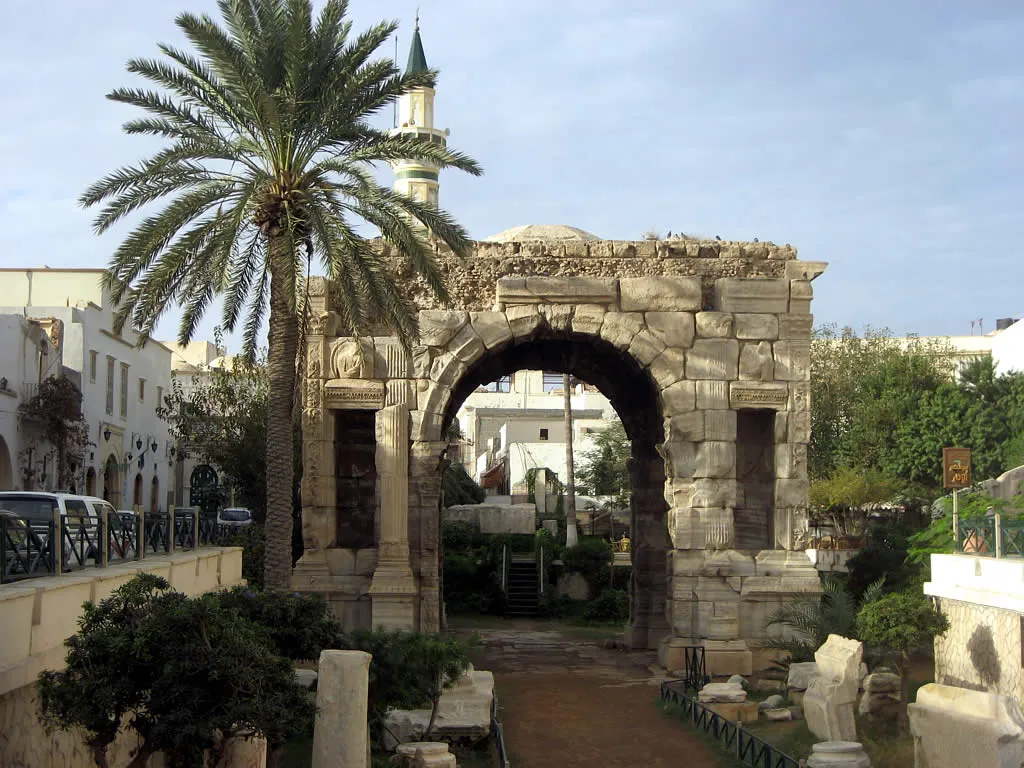
Tripoli medina · Leptis Magna · Sabratha
One guided day, escort and permits included.
Tripoli · Leptis Magna · Sabratha · Benghazi · Cyrene · Apollonia
Both halves of Libya in one journey.
Something else on your mind? Ask us on WhatsApp and a member of the team will reply.
Yes. Our Leptis Magna day trip leaves Tripoli at about 8:00, spends around five hours on site and returns by early evening.
After the city was abandoned, sand from the coast buried much of it, protecting the stone until excavation in the twentieth century.
It is the largest and most complete. Sabratha has the more dramatic theatre, and many guests see both on our West Libya tour.
Very little on site, so we plan visits for the morning and late afternoon and take lunch in Khoms.
Tell us your dates and what you want to see. Within 24 hours our team in Tripoli will reply with a route, a clear price and an honest view of what is possible.